
The question of when to drink a protein shake is one of the most debated topics in the fitness community, from the gyms of New York to the fitness expos of London. There's a deep-rooted myth about the strict "anabolic window" that supposedly closes 30 minutes after your workout. But modern research shows the truth is both simpler and more complex.
This guide will help you understand when to take protein to achieve your goals, whether it's gaining muscle or losing weight. We'll debunk myths and provide science-backed advice relevant for anyone training at home or attending events like the Arnold Sports Festival in the US or London Fitness Week in the UK.
The Golden Rule: Daily Intake Trumps Timing
The key principle is that your total daily protein intake matters more than exact timing. If you're not getting enough protein throughout the day, no perfectly timed post-workout shake will save your progress.
Research, including a 2023 review in Nutrients, recommends 1.6–2.2 grams of protein per kilogram of body weight for building and preserving muscle. Distribute your protein evenly across meals and snacks, through foods like chicken, eggs, or protein shakes. In the US, protein bars are a popular choice, while in the UK, oats with protein powder are a common breakfast option.
The 'Anabolic Window' Myth: What Science Says
The "anabolic window" suggested you had only 30 minutes post-workout to consume protein, or your muscles wouldn't grow.
What science says: A 2013 meta-analysis by Dr. Brad Schoenfeld, updated in 2024, showed the window lasts 24–48 hours after exercise. If you ate 1–2 hours before your workout (e.g., eggs or oatmeal, a staple in the UK), your body has enough amino acids for recovery. The key is consistent protein intake to support muscle protein synthesis (MPS).
Optimal Protein Timing: A Step-by-Step Guide
While strict timing isn't critical, certain moments make protein shakes most effective and convenient. Below is a visual guide to optimal timing:
Chart showing optimal protein intake times: 90% effectiveness post-workout, 80% before bed, 70% during the day, 60% in the morning.
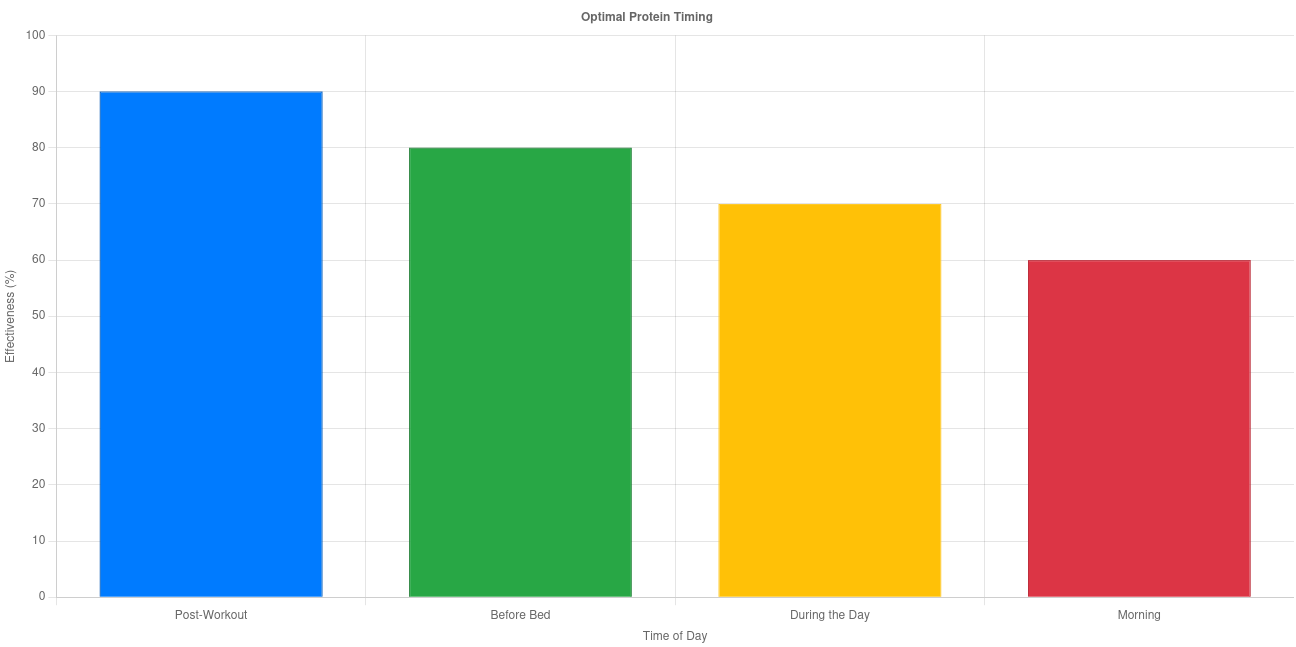
- After a Workout: The most popular time. Protein initiates muscle repair. Whey protein is ideal due to fast digestion, delivering amino acids efficiently. A 2023 study by Jäger et al. confirms that intake within 1–2 hours post-workout maximizes muscle adaptation.
- Before Bed: Casein protein digests slowly, providing amino acids over 6–8 hours to prevent muscle breakdown during sleep, ideal for muscle growth.
- Throughout the Day: If your diet lacks protein, a shake is a great snack. Aim for 3–4 servings of 20–40 g daily to optimize MPS (Morton et al., 2023).
- In the Morning: A shake curbs hunger and controls appetite, especially if you skip breakfast, common for busy professionals in cities like London or New York.
Choosing the Right Protein
Your choice depends on goals and timing. Always read the label: check protein content per serving (ideally 25–30 g per 30 g scoop), added sugar (<5 g), and avoid excessive fillers (e.g., maltodextrin). High-quality protein has at least 80% protein per serving, ensuring you meet your needs without extra calories or frequent repurchasing.
| Protein Type | Digestion Speed | Best Time to Take | Key Features |
|---|---|---|---|
| Whey | Fast (30–60 min) | Post-workout, daytime | High in leucine, 25–30 g protein per serving |
| Casein | Slow (6–8 hours) | Before bed | Steady muscle nourishment, 20–25 g protein per serving |
| Blends | Medium | Anytime | Combines whey and casein, 20–25 g protein per serving |
| Plant-based | Varies | Daytime, post-workout | Pea + rice provides complete profile, 15–25 g protein per serving |
Tip: If a 30 g serving has less than 20 g protein, it may indicate low quality or excessive fillers, leading to higher consumption and costs.
Protein for Different Goals and Demographics
Protein needs vary by goal and age:
- For Weight Loss: In a calorie deficit, protein preserves muscle and promotes satiety. Its high thermic effect (20–30% of calories used for digestion) helps control appetite (Kerksick et al., 2024). Protein shakes are popular at events like the Arnold Sports Festival for those cutting weight.
- For Maintenance: After reaching your goal, maintain 1.6–2.2 g/kg to preserve muscle and metabolism, crucial for long-term health.
- For People Over 50: Sarcopenia reduces muscle mass with age. Up to 2.2 g/kg supports muscle and bone health (Bauer et al., 2023). Distribute protein evenly across the day.
Protein and Hormonal Balance
Protein influences hormones like insulin (stabilizes blood sugar, aiding recovery) and cortisol (reduces stress-related muscle breakdown). A 2024 study in Sports Medicine found that consistent protein intake lowers cortisol levels, enhancing recovery after workouts, especially for those training intensely at events like London Fitness Week.
Protein for Vegetarians and Vegans
For those avoiding animal products, choosing the right protein powder is key:
- Plant-based Sources: Pea, rice, hemp, soy, or legume proteins. Soy is the only complete plant protein; others need combining for all essential amino acids. Aim for 20–25 g protein per 30 g serving.
- Blends: Vegan blends (e.g., pea + rice) provide a complete amino acid profile, ideal for muscle growth.
- Timing: Same as whey: post-workout or daytime to meet daily needs.
Frequently Asked Questions (FAQ)
Do I need to take protein if I don’t work out?
Yes, protein is an essential macronutrient. If your diet lacks 1.6–2.2 g/kg, a shake fills the gap, even without exercise.
Does protein help with weight loss?
Yes, protein promotes satiety, reducing calorie intake, and preserves muscle during weight loss, maintaining metabolism.
Can I drink a protein shake on an empty stomach?
Yes, it’s safe. A morning shake curbs hunger, and daytime shakes ensure protein intake.
Can I get fat from protein shakes?
No. Fat gain comes from a calorie surplus, not protein specifically, regardless of source.
What’s the difference between protein and a mass gainer?
Protein delivers protein for muscle repair. A mass gainer is a high-calorie protein-carb blend for those struggling to gain weight, popular at US fitness expos.
Can a protein shake replace a full meal?
No, it’s a supplement, lacking vitamins, minerals, and fiber found in whole foods. Use it as a diet addition.
Can I take protein if I have kidney problems?
Consult a doctor. High protein can strain kidneys, but only in those with pre-existing conditions.
How many times a day should I take protein?
Depends on your protein goal and diet. Aim for 3–4 servings of 20–40 g daily (Morton et al., 2023).
What should I mix my protein with?
Water (for calorie control), milk (for muscle gain), or juice. Choose based on goals, a common practice in the US with protein bars or shakes.
What supplements can I combine with protein?
Protein pairs with creatine for strength or carbs (e.g., oat flour) for a homemade gainer, useful for mass gain.
References and Research
- Schoenfeld, B. J., Aragon, A. A., & Krieger, J. W. (2013). The effect of protein timing on muscle strength and hypertrophy: a meta-analysis. Journal of the International Society of Sports Nutrition.
- Morton, R. W., et al. (2023). A systematic review, meta-analysis and meta-regression of the effect of protein supplementation on resistance training-induced gains in muscle mass and strength. Nutrients.
- Jäger, R., et al. (2023). International Society of Sports Nutrition Position Stand: protein and exercise. Journal of the International Society of Sports Nutrition.
- Kerksick, C. M., et al. (2024). Protein supplementation and body composition: a review of mechanisms and outcomes. Sports Medicine.
- Bauer, J., et al. (2023). Evidence-based recommendations for optimal dietary protein intake in older people. Journal of the American Medical Directors Association.
Share your experience with protein in the comments or tell us how you achieve your fitness goals at events like the Arnold Sports Festival or London Fitness Week!


tanveer malik
2016-01-04 15:12:40
pump the baysef
mogan
2016-01-04 15:12:40
taking egg before workouts good?
karan
2016-01-04 15:12:40
Is syntha 6 isolate good???
Гуроврв
2016-01-04 15:12:40
Matrix protein is the best
PhotoTest
2016-01-04 15:12:40
Matrix
Sunil Chauhan
2016-01-04 15:12:40
Bpi its good
daud adnan
2016-01-04 15:12:40
ON gold standard whey protein is best protein
Sunay
2016-01-04 15:12:40
ON Ultimate nutrition prostar Muscle blaze ( good and value for money )
Jasbir
2016-01-04 15:12:40
which brand whey protein is best to buy. please suggest me.
amit
2016-01-04 15:12:40
which is the best multi vitamins to take