Leg training is arguably the toughest part of fitness. It's exhausting, and soreness can last for days. But even a seemingly perfect program stops yielding results over time. At that point, it's crucial to find fresh approaches to stimulate further progress, like the ones detailed in our related article.
We've gathered tips based on the experience of Cellucor athlete and IFBB Physique PRO Craig Capurso. These recommendations will make your leg workouts more effective, overcome plateaus, and help you feel your muscles growing again. Let's explore six key ideas that will benefit even beginners.
For beginners: If you're just starting, consult a trainer or doctor first, especially if you have joint issues. Start with light weights, hone your technique, and gradually increase the load to avoid injuries.

Data based on the study Yavuz, H. U., et al. (2015). "Kinematic and EMG activities during front and back squat variations in maximum loads." Journal of Sports Sciences.
1. Master Squat Technique
Squats are the exercise to start your leg workout with. When you're full of energy, this multi-joint movement engages the maximum number of muscles. It provides a powerful boost for growth and allows you to work with significant weight.
Squats are the foundation for leg development. But it's important to avoid technical mistakes to prevent injury. This applies to other lower-body exercises as well.
For beginners: Try starting with an empty barbell. Place your feet shoulder-width apart, keep your back straight. Lower until your thighs are parallel to the floor, then rise by pushing through your heels. Perform 3 sets of 12–15 reps. Ask a trainer or experienced friend to check your technique. Regular practice will make the movements automatic.
2. Plan Your Progress
Even the best program loses effectiveness over time. To move forward, you need to periodically change your training plan. It's best to choose a strength program consisting of different phases — with varying loads and volumes.
After 1–2 months, you can repeat the program, but with higher working weights. This will give your muscles a new stimulus for growth. Enhance your routine with expert advice from 6 Insider Tips For Building Your Ultimate Legs.
For beginners: Try a simple scheme, like 5x5. Keep a training diary: record weights, sets, and reps. Add 2–5 kg weekly if technique remains correct. If progress stalls, reduce the load and let your body rest.
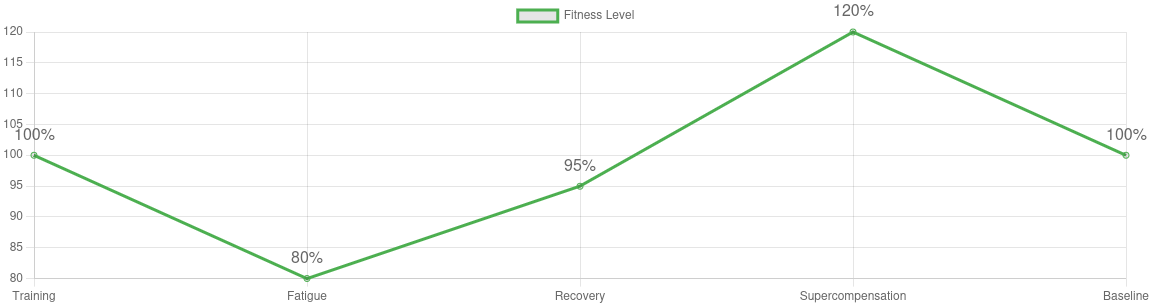
Data based on the supercompensation model from the study Busso, T. (2003). "Variable dose-response relationship between exercise training and performance." Medicine & Science in Sports & Exercise.
3. If Progress Stalls, Experiment
Sometimes an old program stops working. This is called a plateau. It's a normal phenomenon, but it requires changes.
Try varying exercises. Research shows that changing movements works better than simply increasing weight. Here are a few ideas:
- Replace classic squats with front squats. When the bar is in front, quadriceps work more intensely.
- Experiment with foot position in the leg press. Higher placement shifts emphasis to glutes, lower — to quadriceps. Master your technique with guidance from The 4 Best Leg Machines: A Complete Guide.
- Narrow stance loads the outer thighs, wide — the inner.
For beginners: Change one element per week to allow your body to adapt. If you feel joint pain, return to the previous option.
4. Prepare for Deep Squats
Squat depth is an indicator of your level. If you don't go low enough, glutes don't get proper load, which can create imbalance with quadriceps.
To learn to squat deeper, start with light weight and gradually increase amplitude, monitoring technique. A good warmup will heat up muscles and joints, which is key for Safety.
For beginners: Start with 5–10 minutes of light cardio. Then add dynamic stretching: hip rotations and bodyweight squats. Lower to parallel with the floor. If knees bother you, use a bench or box to control depth.
5. Strengthen Hamstrings and Glutes
Squats excellently load quadriceps and glutes, but the back of the thighs (hamstrings) often remains neglected. This can lead to disproportionate appearance and make knees less stable.
Weak hamstrings increase injury risk. Maintain balance: quadriceps strength should be about 1.5 times higher than hamstrings. Romanian deadlifts are ideal for this.
For beginners: Take an empty bar for Romanian deadlifts. Keep your back straight, knees slightly bent. Lower the bar by pushing hips back. Do 3 sets of 10–12 reps. If difficult, use dumbbells.
6. Increase Training Intensity
To boost intensity, try various techniques: Forced reps, drop sets, or supersets. This will "shock" the muscles.
Other ways to diversify load:
- High volume with heavy weight for mass gain.
- Using resistance bands or chains for strength development.
- Pauses at the bottom of squats to strengthen the "dead" zone.
For beginners: Introduce new methods gradually. Start with pauses: hold for 2–3 seconds at the bottom of a squat with light weight. Perform 2–3 sets. Move to high volumes later. Target your hips effectively with exercises from The 4 Best Exercises To Work Hips.
Nutrition for Leg Muscle Growth
Nutrition plays a key role. Consume 1.6–2.2 g of protein per kg of body weight daily (chicken, eggs, cheese, protein supplements). Carbs (oatmeal, rice) provide energy, and healthy fats (avocado, nuts) support hormonal balance. Drink plenty of water and try creatine (3–5 g per day). For muscle growth, create a calorie surplus—add 300–500 kcal to your norm.
Frequently Asked Questions (FAQ)
How should a beginner properly perform squats to avoid injuries?
Squats are the foundation of leg training, and technique is key here. Improper execution can lead to knee or back injuries. For beginners, ideally start with an empty bar. Place feet shoulder-width apart, keep back straight, and slowly lower until thighs are parallel to the floor. Rise by pushing through heels, ensuring knees don't go beyond toes. Start with 3 sets of 10–12 reps.
What nutrition is needed for leg muscle growth and mass gain?
Nutrition is half the success. For muscle growth, sufficient protein is needed: aim for 1.6–2.2 g per kilogram of your weight. Great sources — chicken, eggs, cheese, or protein powders. Carbs like oatmeal or rice provide energy, and healthy fats from avocado, nuts, or fish support hormonal balance. Importantly, create a small calorie surplus — about 300–500 kcal above your norm.
How to prevent hamstring injuries during leg training?
Hamstring injuries are a common problem, especially if these muscles are weaker than quadriceps. To avoid them, pay attention to the back of the thighs. Add exercises like Romanian deadlifts or leg curls to your program. Always warm up before training. Avoid sudden movements and overload — increase weight gradually.
What is progressive overload in leg training and how to apply it?
Progressive overload is the foundation of muscle growth. It means gradually increasing the load so muscles continue to adapt. For legs, this can be adding weight, increasing reps or sets, or reducing rest time between sets. Increase weight by 2–5 kg weekly, but only if technique remains correct.
What intense techniques for leg training help overcome plateaus?
When progress stalls, intense techniques can provide a new impetus. Drop sets—perform a set with maximum weight, then immediately reduce it and continue to failure. Pauses in squats (hold for 2–3 seconds at the bottom) strengthen power. Introduce these methods gradually to avoid overtraining.
How to avoid overtraining in intense leg workouts?
Overtraining manifests in chronic fatigue, muscle pain, and lack of progress. To avoid it, give legs 48–72 hours rest between workouts. Monitor sleep (7–9 hours) and nutrition. If you feel a decline in strength, take a deload day with light stretching or walking.
How to integrate cardio into a leg training program?
Cardio improves endurance but needs to be smartly combined with strength training. Don't do intense cardio on the same day as squats. Better add 20–30 minutes of low-intensity cardio (walking, cycling) after workout or on a separate day. This helps burn fat without losing muscle mass.
How does leg training affect overall metabolism and fat loss?
Leg training engages the body's largest muscles, sharply boosting metabolism during and after sessions. This is called the afterburn effect (EPOC), where the body continues burning calories for recovery. Regular leg workouts not only build muscle but also accelerate fat loss.
List of References
- Gullett, J. M., et al. (2009). "A biomechanical comparison of back and front squats in healthy trained individuals." Journal of Strength and Conditioning Research.
- Yavuz, H. U., et al. (2015). "Kinematic and EMG activities during front and back squat variations in maximum loads." Journal of Sports Sciences.
- Contreras, B., et al. (2016). "A comparison of gluteus maximus, biceps femoris, and vastus lateralis electromyographic activity in the back squat and barbell hip thrust exercises." Journal of Applied Biomechanics.
- Zabaleta-Korta, A., et al. (2021). "The role of exercise selection in regional muscle hypertrophy: A randomized controlled trial." Journal of Sports Sciences.
- Peterson, M. D., et al. (2024). "Progressive overload without progressing load? The effects of load or repetition progression on muscular adaptations." PeerJ.
- Busso, T. (2003). "Variable dose-response relationship between exercise training and performance." Medicine & Science in Sports & Exercise.